
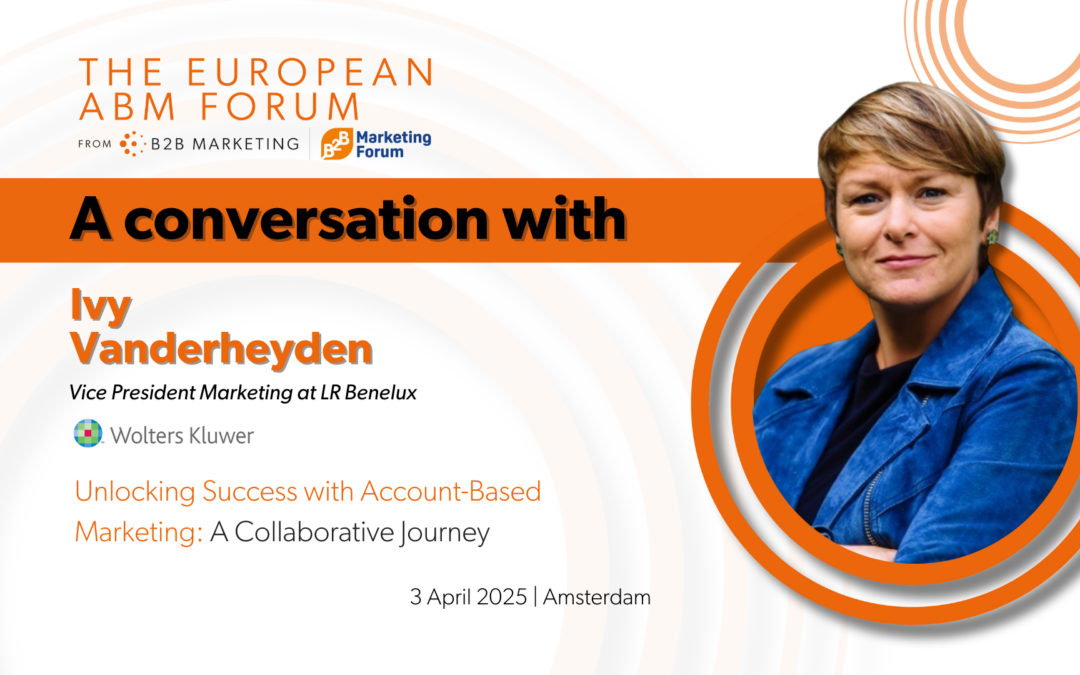
Unlocking succes with Account-Based Marketing: key insights from Ivy Vanderheyden
Account-Based Marketing (ABM) success is within reach for any B2B team willing to align marketing and sales. ABM has become a game-changer for B2B companies aiming to drive efficiency and impact. In a recent conversation with Ivy Vanderheyden, VP of Marketing at Wolters Kluwer, we explored the strategies behind successful ABM implementation, the importance of cross-functional collaboration, and key recommendations for businesses looking to refine their approach.
The Role of Collaboration in ABM Success
One of the primary drivers of Account-Based Marketing success is strong collaboration between marketing and sales. Ivy emphasized that ABM programs thrive when both teams take equal ownership. This requires:
- Clear communication between departments
- Shared KPIs that align short-term and long-term goals
- A culture of trust to ensure seamless execution
“We started in Belgium, where we had a solid partnership between marketing and sales. Trust was key in ensuring that both teams understood the value of ABM and worked together towards common targets,” Ivy explained.
She also noted that balancing short-term sales objectives with long-term customer engagement is essential for sustained success.
Measuring ABM Success: Short-Term vs. Long-Term Goals
Tracking ABM performance involves defining clear success metrics. Ivy shared that their team focused on:
- Short-term goals: Accurate contact data collection and increased engagement
- Long-term goals: Higher portfolio value and reduced customer churn
“We regularly met with both teams to review progress and refine our strategies based on what was working or not,” Ivy said. “It’s about building trust and learning from each campaign to improve future efforts.”
That learning loop is key to driving long-term Account-Based Marketing success.
Organizational Change and Cultural Shifts
Implementing ABM requires more than just marketing and sales alignment; it demands a cultural and structural shift within the organization. Ivy highlighted their journey toward a unified Benelux sales team, emphasizing how organizational alignment played a pivotal role in ABM success.
“This change took time but was critical for aligning our goals and strategies,” she shared. “Having a shared vision between the VP of Sales and myself was a major success factor. We now have shared KPIs and a common approach to sales and marketing, making ABM a key part of our overall strategy.”
4 Key Recommendations for Account-Based Marketing Success
For businesses looking to launch or optimize their ABM strategy, Ivy provided the following insights:
- Make ABM a Dedicated Focus: Treat ABM as a strategic priority, not just another task.
- Define Clear Goals: Establish both short-term and long-term objectives to drive progress.
- Ensure Organizational Alignment: Involve other departments like customer service for full organizational buy-in.
- Leverage Customer Segmentation: Understand your target audience and create personalized ABM campaigns to maximize impact.
Final Thoughts
Ivy concluded with a powerful reminder:
“ABM is not just a marketing initiative – it’s an organizational change. Ensure that all departments are on board, and align your entire team with clear, shared objectives.”
Her insights reinforce the importance of teamwork, strategic planning, and long-term commitment in ABM success. For those eager to learn more, Ivy will be sharing real-life case studies and success stories at the upcoming European ABM Forum.
Are You Ready to Elevate Your ABM Strategy?
Will you be attending Ivy’s session? If you’re looking for actionable insights into aligning marketing and sales for ABM success, The European ABM Forum 2025-event is one you don’t want to miss!